
Global Animal Care Experts Unite in Coffs For Successful Procedure of Zippy
March 18, 2026
News
Global Animal Care Experts Unite in Coffs For Successful Procedure of Zippy
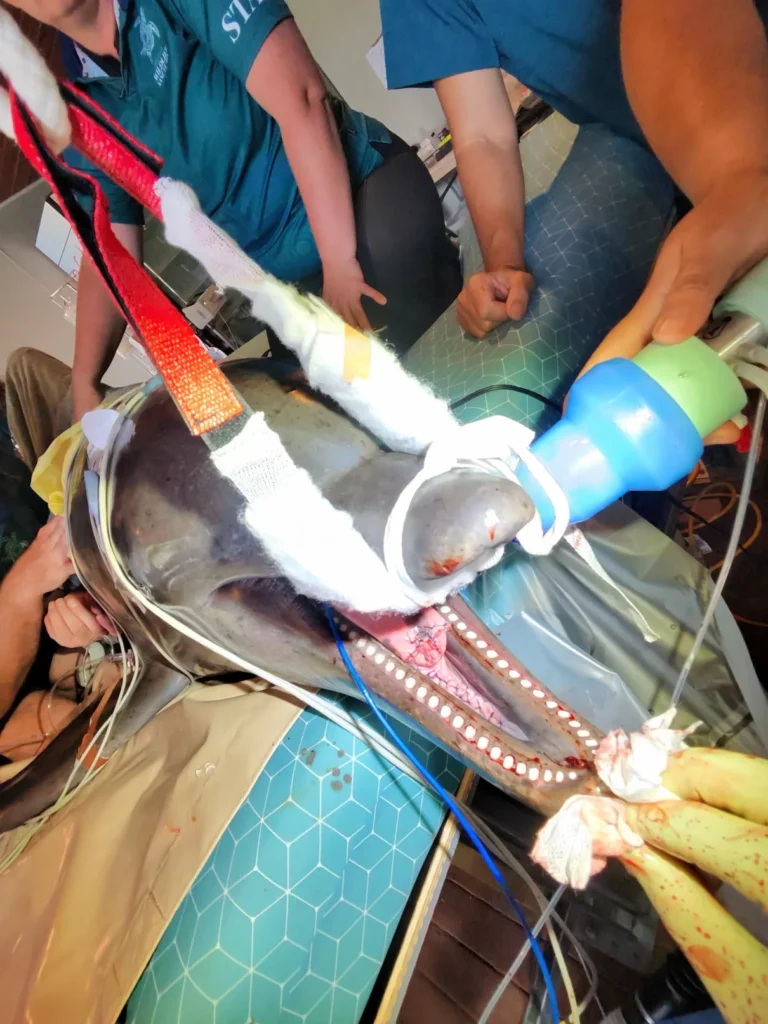
On 17 March, Zippy underwent a planned procedure to monitor and treat a long-standing papilloma virus that had developed into a sarcoma, a condition also seen in wild dolphin populations. The Sanctuary is pleased to confirm that Zippy has successfully come through surgery, marking an encouraging step forward in his ongoing care.
A world-class, international team of specialist marine veterinarians, anaesthetists, surgeons and animal care professionals came together in Coffs Harbour, travelling from across Australia and the United States to support the procedure and ensure the highest standard of care for Zippy.
Managing Director Tiga Cross said the outcome reflects both global collaboration and the dedication of the local team.
“Specialists were brought together from across the world, but this has been a long-term care journey led by our team. This procedure represents an important milestone for the Sanctuary and supports the continued development of advanced, world-class care right here in Coffs Harbour.
“It’s a powerful reminder of what’s possible when expertise, passion and community come together to care for marine life.
“Zippy is an extraordinary individual, and a beloved animal to locals and visitors alike. Every decision in his care has been guided by expert advice and his best interests, and we are very pleased with this outcome for Zippy.”
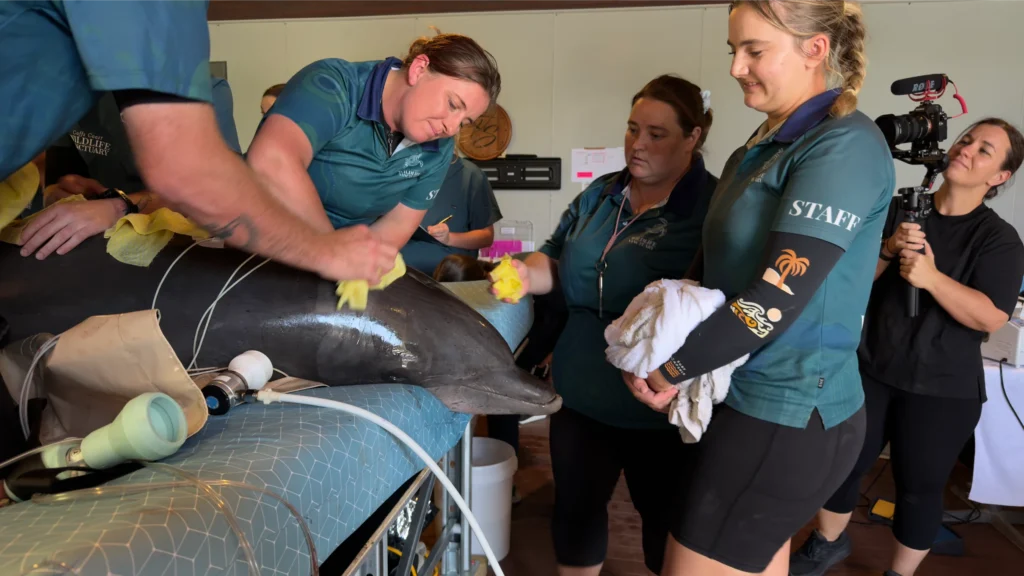
The procedure forms part of a carefully managed health plan, with Zippy continuing his recovery under close veterinary and animal care supervision. Zippy will now continue his recovery with a focus on comfort, monitoring and ongoing wellbeing, supported by the dedicated Sanctuary team.
All assessments and procedures were conducted in consultation with the Department of Primary Industries, the Zoo and Aquarium Association (ZAA), and the NSW Veterinary Practitioners Board. As a ZAA-accredited facility, the Sanctuary meets rigorous, independently assessed standards of animal welfare and care.
Additional Information
Zippy – Background
Born on 26 June 1988, Zippy was the son of Bucky and Buttons, both rescued dolphins who were unable to be returned to the wild. He is one of the first dolphins born at the site formerly known as Pet Porpoise Pool and remains a permanent resident at what is now Coffs Coast Wildlife Sanctuary due to his inability to survive independently in the wild. His name is a play on his mother’s name, Buttons.
Zippy is part of a small group of dolphins in the Sanctuary’s care whose parents were rescued and deemed non-releasable.
What is the Pappiloma Virus? What does it do, and why did it need to be operated on?
What is the Pappiloma Virus? What does it do, and why did it need to be operated on?
Animals in human care have a longer life-expectancy than those in the wild, largely because they have access to modern medical assistance to prolong their life in a welfare-rich environment. In the wild, the average life-expectancy is approximately 30 years, whereas for animals in human care, the expectancy is closer to 50-60 years. With this increased age, animals experience ‘old age’ related conditions, like other species such as domestic animals, and even humans.
At the Coffs Harbour facility, the animal care team witnessed the same condition and similar procedure in Zippy’s biological father, Bucky. Bucky survived a similar surgery for the same condition and lived a welfare-rich life post-surgery. Bucky was 48 years old when the surgical procedure was carried out and lived on to be more than 50 years of age before passing of old age.
Breeding dolphins at the facility
Breeding dolphins at the Sanctuary Since March 2018, the Sanctuary has not bred dolphins, a decision made in response to evolving community expectations and to align with its vision as a world-class marine conservation organisation. While reproduction is no longer part of life for the dolphins in our care, they continue to experience dynamic social relationships, enrichment, and a comprehensive range of behavioural programs, including play, mock foraging, and voluntary participation in their own health care.
Tags :
Share This :
Latest Blog